Maintenance & Operation Essentials for Heavy Duty Truck Lifts
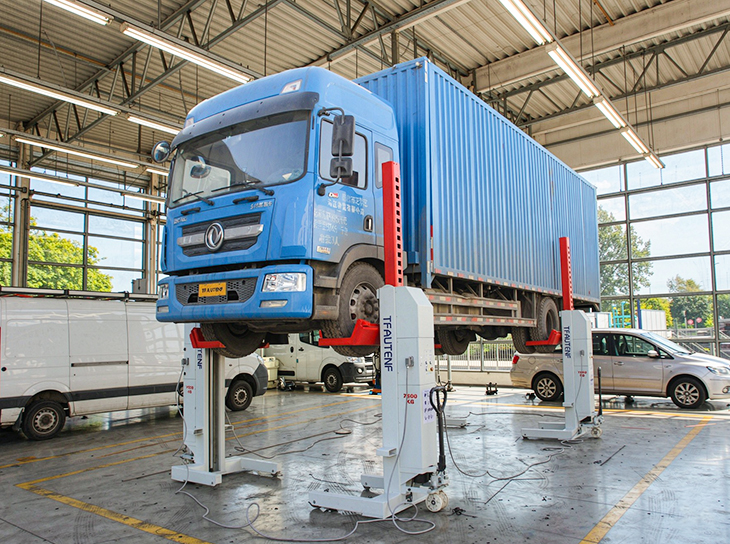
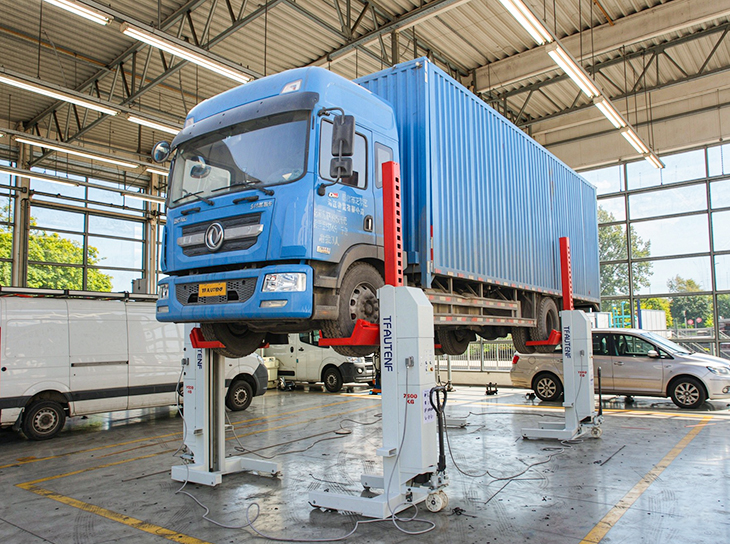
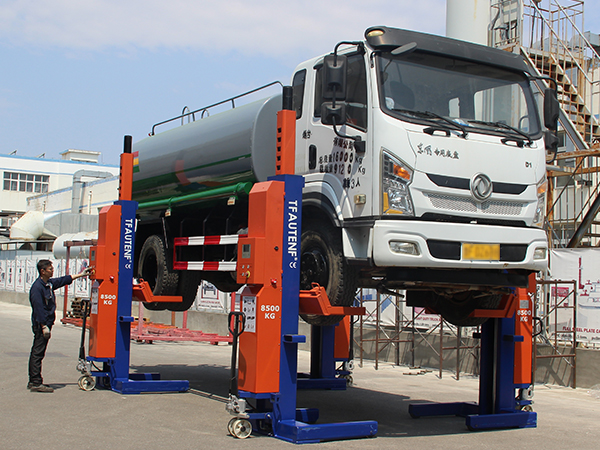
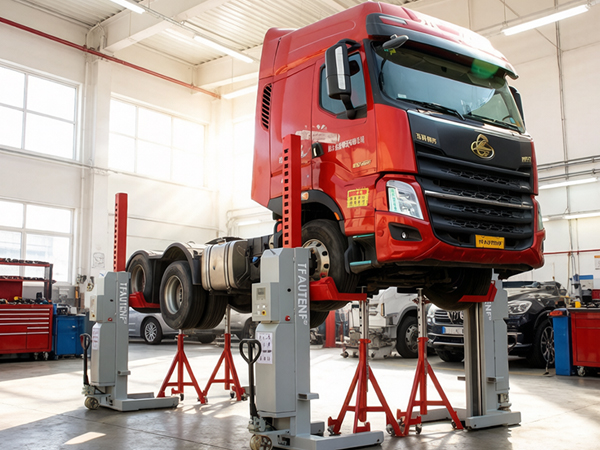
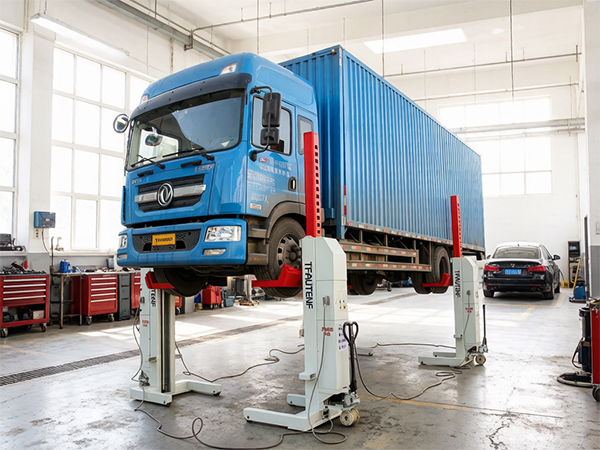
The heavy-duty truck lift is core equipment in any repair shop, and routine maintenance directly impacts both safety and service life. Before starting work each day, check the hydraulic oil level and top it up with the same grade of oil if it falls below the mark. Also inspect the column guide rails for debris and check that the anchor bolts are not loose. Every week, apply grease to the guide rails and sliding blocks, and clean mud and grit off the surface of the cylinder piston rods to prevent damage to the seals. Every month, verify synchronization performance by running a full no-load lift cycle and observing the height difference between columns—if it exceeds the tolerance, inspect the synchronization valve or linkage immediately. Every six months, replace the hydraulic oil and clean the suction filter. If the old oil appears milky white or foamy, it means water contamination or emulsification, and the oil must be changed early. For the electrical system, periodically tighten the wiring terminals to prevent poor contact that could cause a single column to stop responding. In operation, always remember the "three don'ts": don't lift if the center of gravity is off, don't lift if overloaded, and don't lift if the support is not properly in place. With the vehicle parked steadily and the handbrake engaged, position the lifting arms on both sides of the tires. No one is allowed under the vehicle during lifting. Before lowering, make sure there are no people or obstacles around, then slowly lower the vehicle until it is locked in the low position. If any abnormality such as strange noises, drifting downward, or loss of synchronization is detected, stop the machine immediately and report it for repair—never operate the lift in a faulty condition. With proper maintenance and correct operation, a heavy-duty truck lift can easily last ten years or more.