Jack Stands for Vehicle Lifts: The "Hidden Chassis" of Automotive Repair Safety
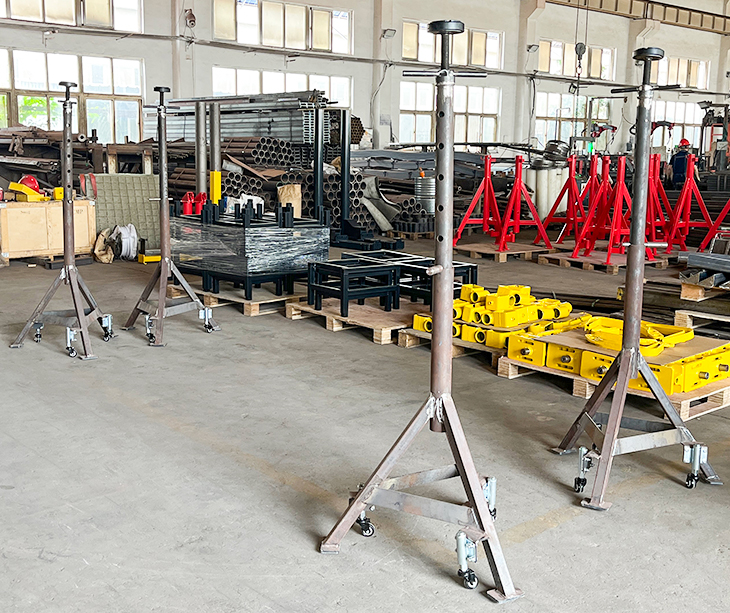
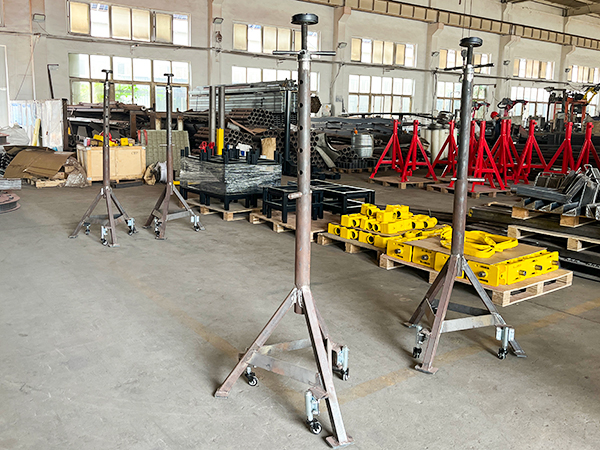
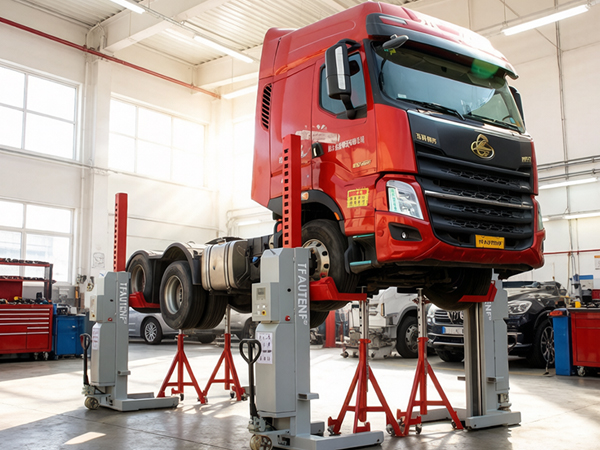
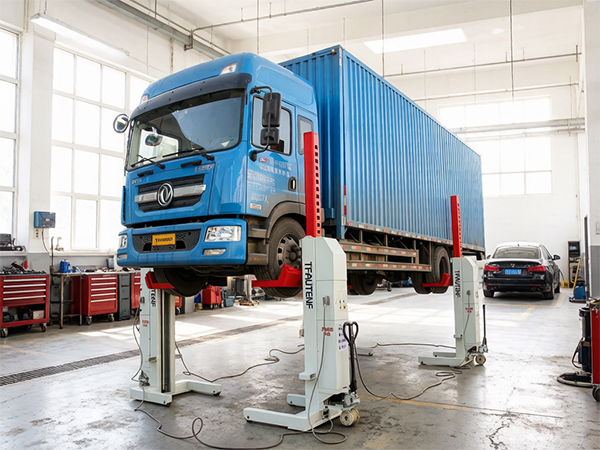
In our newly developed accessory solution for light-duty vehicle lifts, we have introduced heavy-duty jack stands engineered to hold 1.25 tons per unit, with a combined capacity of 5 tons for a set of four. Installing these stands beneath the bases of two-post lifts, clearfloor lifts, and their intelligent counterparts is far more than a simple add-on; it fundamentally reconstructs the safety logic of automotive repair.
Regarding the equipment itself, the core benefits lie in stability and protection. Leveraging the geometric rigidity of the triangle, these jack stands transform the concentrated load at the lift columns into a distributed surface load, significantly reducing ground pressure (PSI). This effectively mitigates the risk of floor cracking or settling caused by inadequate concrete strength—a common issue in older workshops or leased properties. Furthermore, the stands provide exceptional shear resistance, counteracting the horizontal torsion generated during lifting operations and preventing equipment drift. Crucially, they act as a "mechanical safety lock." In extreme scenarios involving hydraulic failure or power loss—even in smart lifts—these properly preset jack stands can instantaneously catch a descending vehicle, establishing a second, independent line of physical defense beyond the electronic control systems.
From a broader industry perspective, the implications of this design are profound. Firstly, it significantly lowers the barrier to entry and reduces operational risks for the sector. Many small to medium-sized repair shops often resort to risky practices due to the prohibitive costs of floor reinforcement; these jack stands offer an economical and efficient safety net. Secondly, they elevate standardization across the industry. By providing uniform foundational support, they minimize instability caused by varying floor conditions—such as lift column tilt or vehicle slippage—ensuring more standardized lifting operations. Lastly, they offer tangible, visual evidence of safety compliance for insurance assessments and regulatory inspections, helping shift the industry from "experience-based" to "standard-based" operations.
In essence, while compact, these jack stands function as both "foundation reinforcements" and "mechanical airbags" for lifts at a minimal cost. They represent a critical step toward achieving intrinsic safety in the modern auto repair workshop.