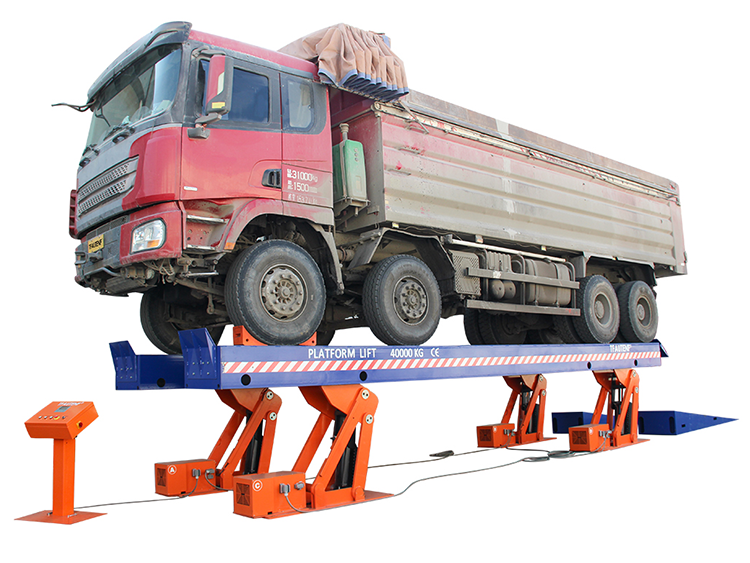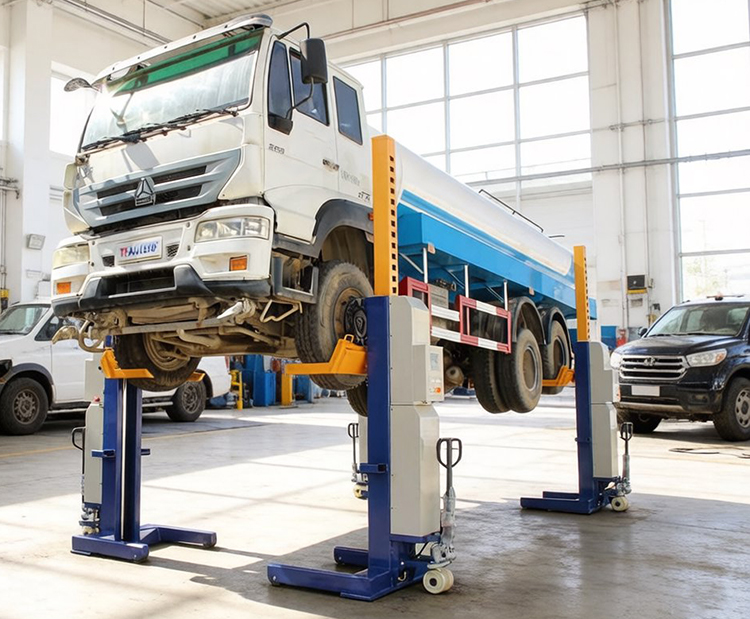
In traditional maintenance systems, heavy-duty truck upkeep has long been limited by cumbersome equipment and fixed locations. However, the emergence of mobile heavy-duty truck lifts is sparking an efficiency revolution in three core application scenarios, thanks to their three key characteristics: "flexible deployment, powerful adaptability, and safety/stability."
Scenario 1: The "Efficiency Multiplier" for Standardized Repair Workshops
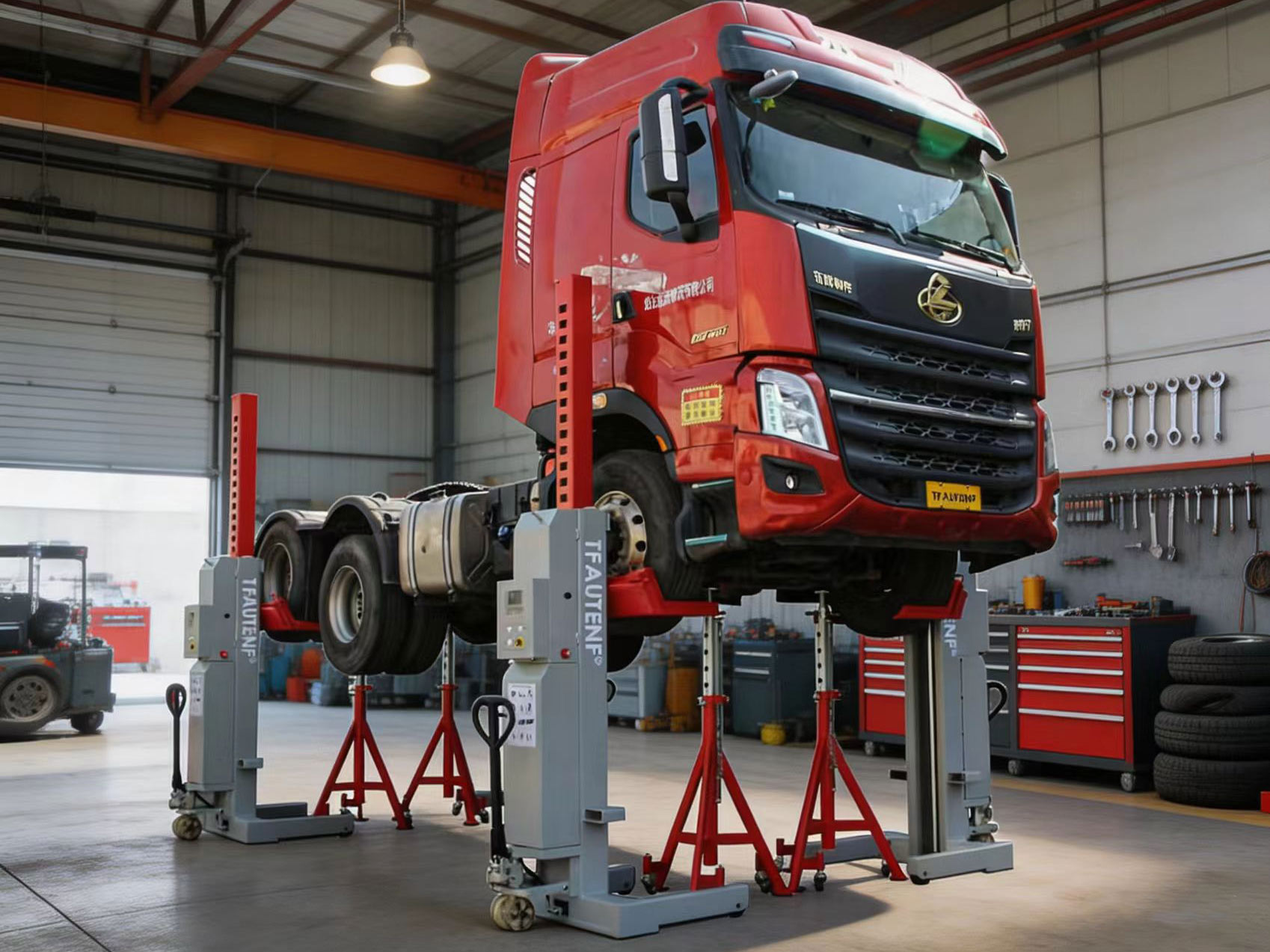
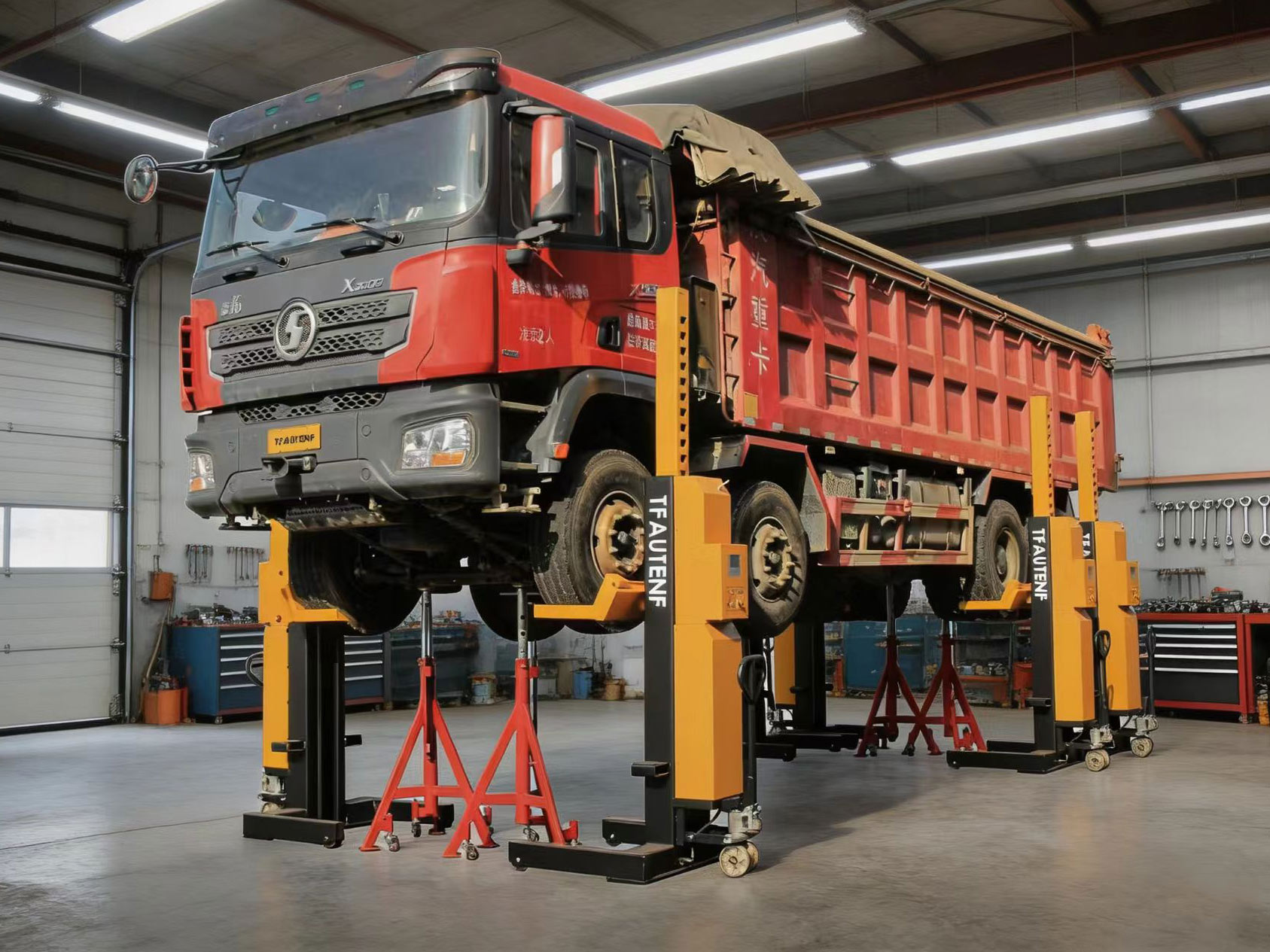
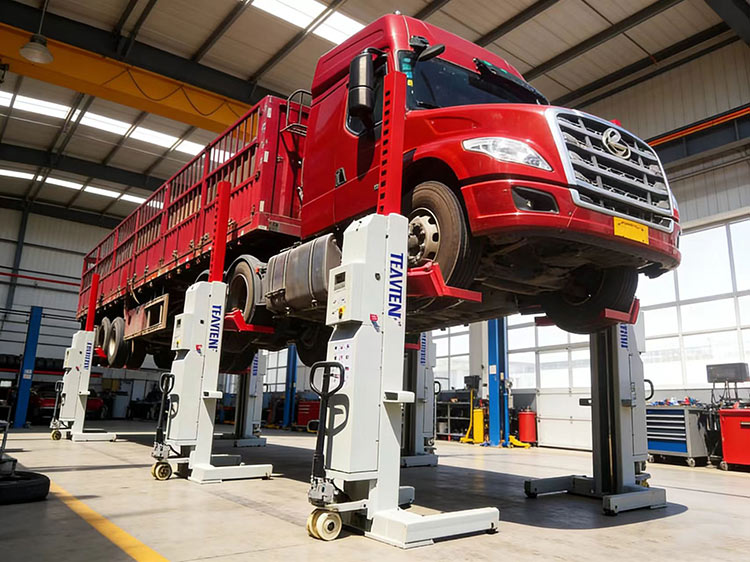
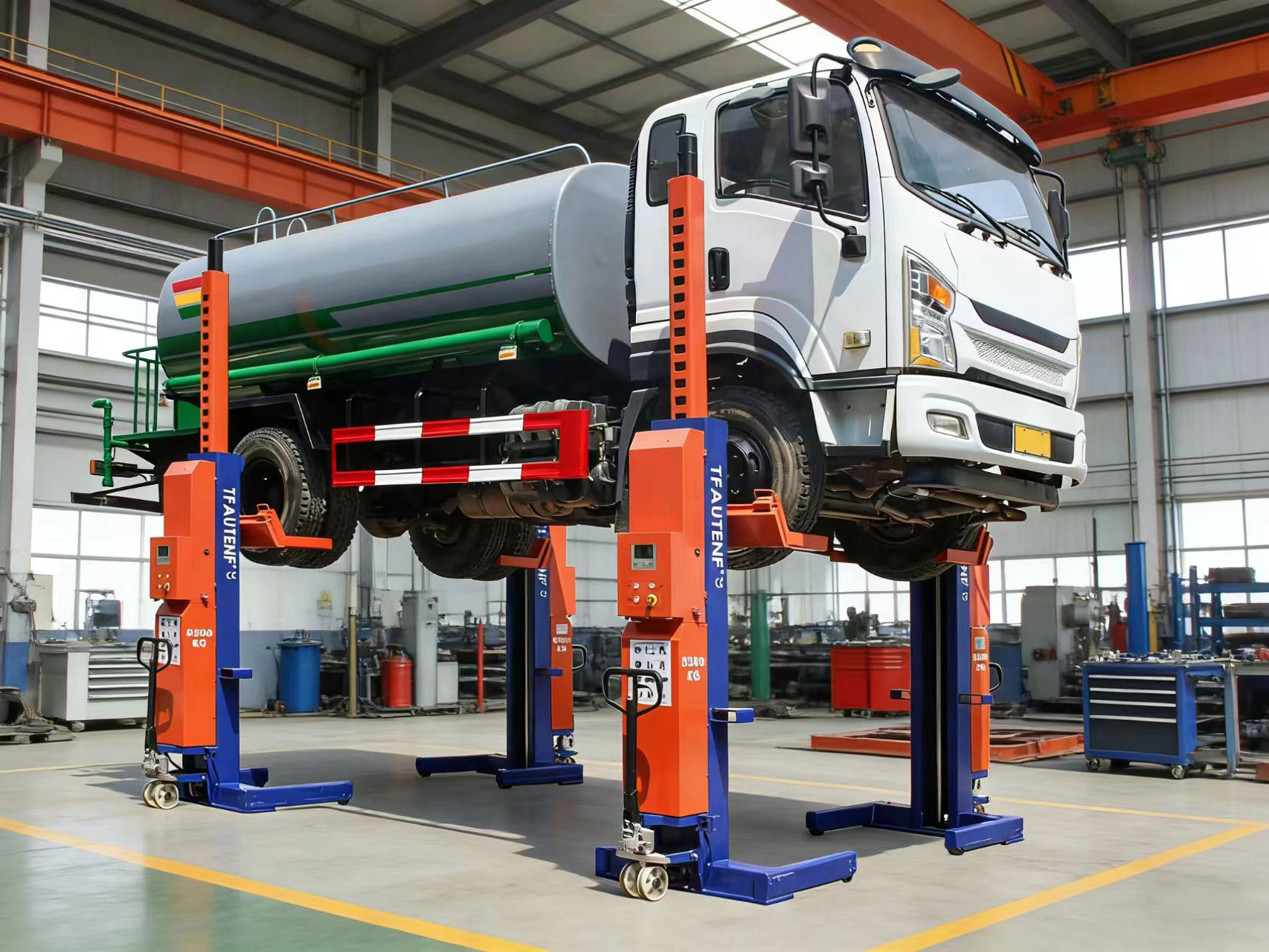
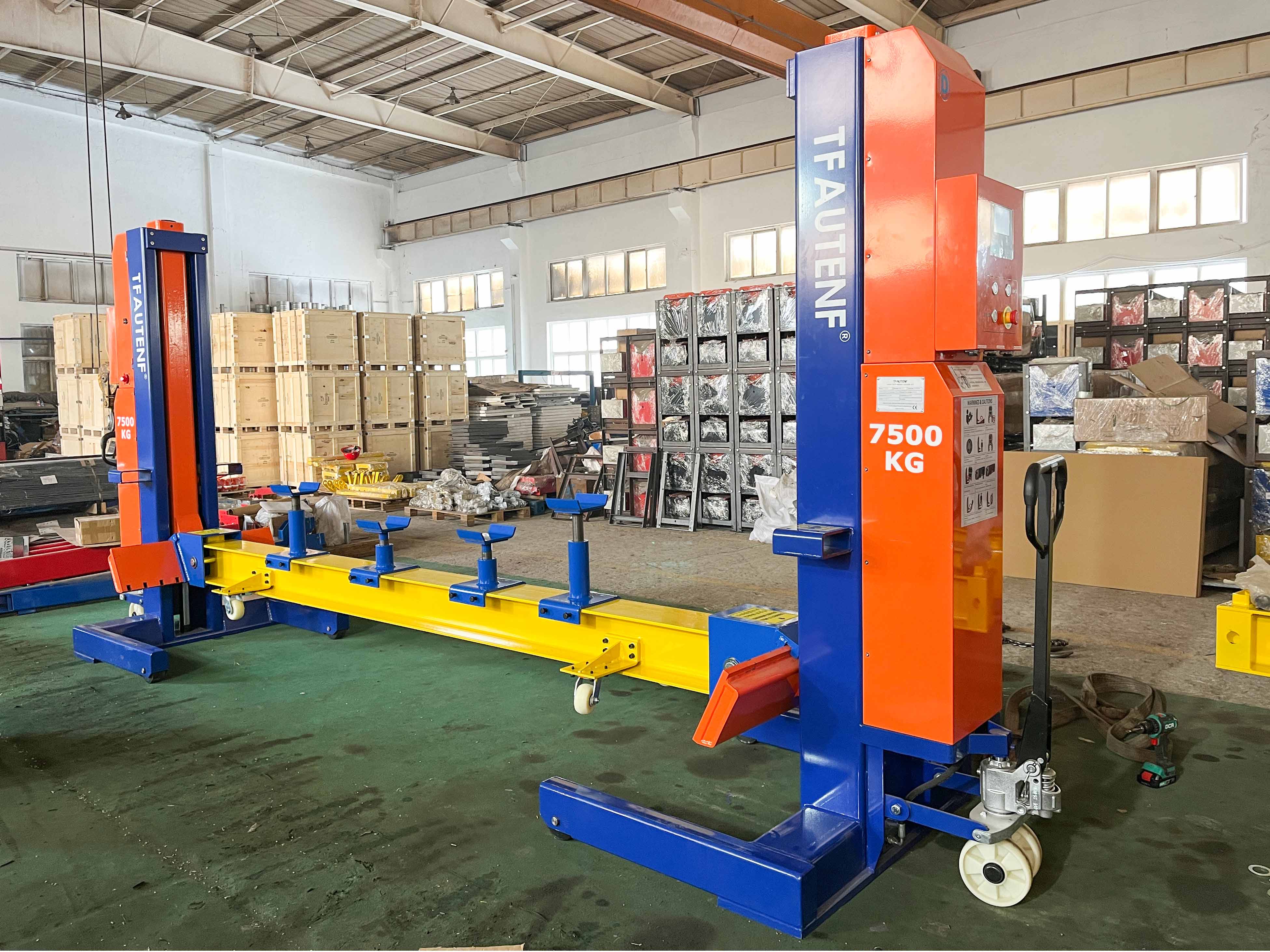
In authorized auto dealership service centers and large repair facilities, fixed maintenance pits occupy valuable floor space, leading to rigid work bay scheduling. Mobile lifts, with their "no-foundation-required, movable" design, eliminate the need for pits and allow flexible work bay configuration based on vehicle size and repair needs. Coupled with wireless remote control and tire-embracing lifting technology, a single operator can lift a heavy truck in about two minutes, increasing work bay turnover efficiency by over 30%. This fundamentally shifts the paradigm from "vehicles waiting for bays" to "bays ready for vehicles."
Scenario 2: The "On-Site Guardian" for Logistics Fleets and Bus Depots
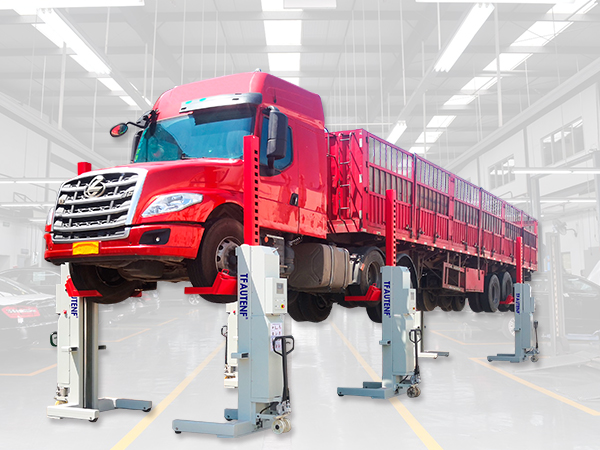
For large logistics companies and public transport operators with their own vehicle fleets, vehicle downtime translates directly to losses. Mobile lifts can be deployed directly within parking lots or transit hubs, enabling "on-the-spot inspection and rapid repair." Their multi-column协同 capability allows flexible adaptation to vehicles of different tonnages, from light trucks to heavy haulers. The modular design even supports simultaneous work on multiple vehicles, significantly reducing the time and cost associated with shuttling vehicles to and from repair shops, thereby ensuring the continuous operation of the transport chain.
Scenario 3: The "Mobile Workstation" for Roadside Assistance and Outdoor Emergencies
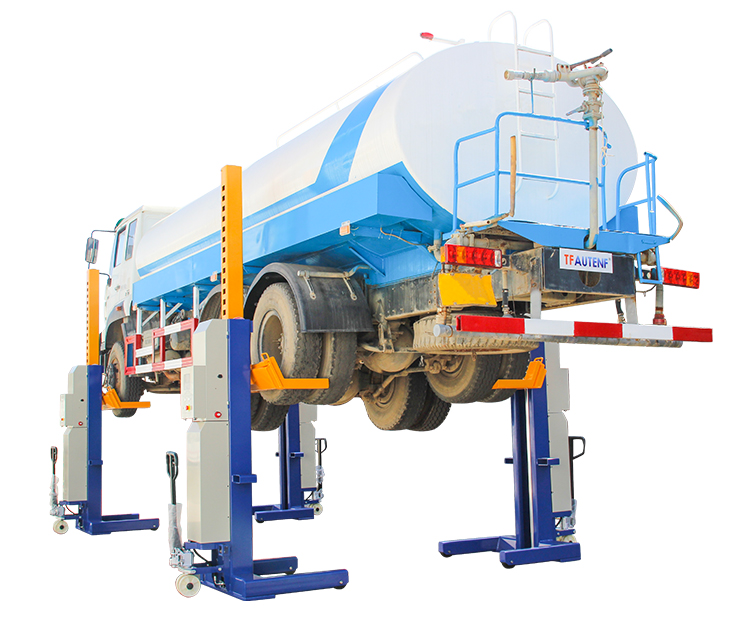
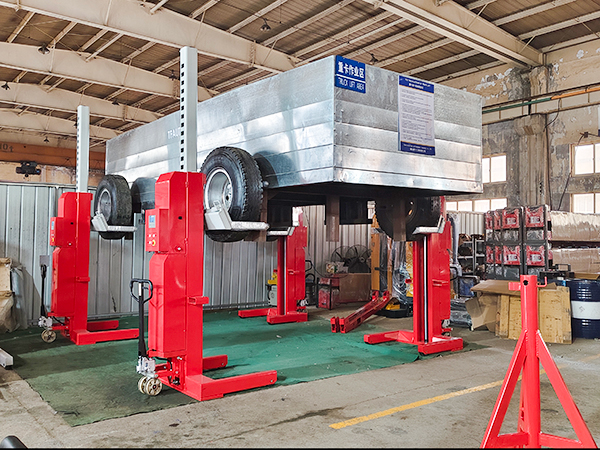
In extreme scenarios like highway breakdowns or remote construction sites, traditional rescue often relies on tow trucks, which is costly and time-consuming. Mobile lifts equipped with high-capacity swivel casters and a robust structure can quickly reach the site and deploy on relatively level ground. Their stable lifting capacity and safety locking systems enable safe performance of critical operations like tire changes and chassis inspections in field conditions. This upgrades the rescue model for large vehicles from "towing away" to "on-site repair," making them indispensable professional equipment in emergency response systems.
Covering these three major scenarios signifies that heavy-duty truck maintenance has comprehensively shifted from "positional warfare" reliant on fixed facilities to "mobile warfare" powered by flexible equipment. The mobile heavy-duty truck lift is no longer just a tool; it has become a core fulcrum reshaping industry service processes and enhancing overall operational resilience.